
Common problems with dormers
No dormer is completely problem-free. Still, most complaints can be traced back to a limited number of causes — almost always originating in the construction phase. Those who know the patterns recognize them early and can intervene in time. This guide goes through the most common problems, including their causes, consequences, and possible solutions.
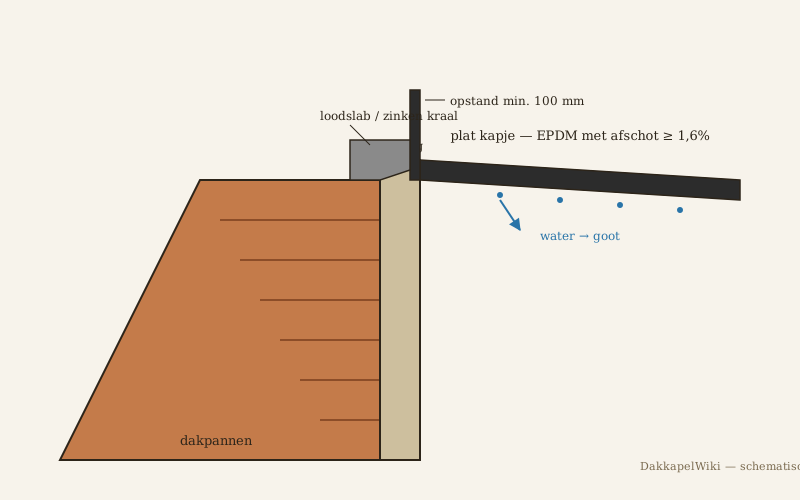
Leaks
Leaks are the most feared problem. Causes:
- Poor lead flashing connection to roof tiles.
- EPDM with tears or loose glued joints.
- Clogged rainwater discharge causing an overflowing roof.
- Damaged vapour-permeable foil around connections.
Solution: have a professional look at it as early as possible. The longer a leak continues, the more invasive the repair.
Condensation
Condensation on the glass or window frame edges in the winter indicates:
- Insufficient ventilation.
- Thermal bridge around the frame.
- Poor U-value of the glass or frame.
Solution: increase ventilation (open vents, activate mechanical extraction), optionally have the connection of the window frame checked.
Mould
Mould develops in damp, poorly ventilated places. Often in corners, behind knee walls, or at the connection between wall and ceiling. Solution: remove the cause (ventilation, leak), replace affected material, treat the surface with a suitable product.
Thermal bridges
Thermal bridges are places where heat escapes faster than elsewhere. They can be recognized by cold spots, condensation, or mould. In existing dormers, this is difficult to solve retroactively without removing the cladding or interior finish.
Draughts
Draughts often come from:
- Poor sealing around the frame.
- Worn seals (rubbers) in operable windows.
- Ventilation grilles that do not close properly.
- Seams between the carpentry finish and the wall.
Solution: replace sealant, renew window seals, adjust or replace the vent.
Cracks in plasterwork or cladding
Small cracks in the plasterwork are often normal and consistent with the movement of a wooden structure. Larger cracks or cracks near corners can indicate structural sagging of the trimmer joist (raveelbalk). In that case, consult a structural engineer or building expert.
Noise nuisance
Outside noise that enters too easily is often caused by:
- Thin or asymmetrical glass.
- Poor sealing around the frame.
- Ventilation grilles without sound attenuation.
Solution: install glass with better sound insulation, replace sealant, mount acoustic vents.
Overheating in the summer
A dormer on a south- or west-facing facade can heat up significantly in the summer. Solution:
- External sun shading (screen or drop-arm awning).
- Night ventilation using an open tilt-and-turn window.
- Split air conditioning if residents structurally suffer from the heat.
Interior sun shading hardly helps against the heat; only against glare.
Planning permission problems
A dormer installed without planning permission can lead to:
- Enforcement order with a penalty.
- Mandatory adjustment to permitted dimensions.
- Sales problems when transferring the property.
Solution: when in doubt, always run the permit check beforehand and legalize retroactively where possible.
Prevention and periodic maintenance
Most problems can be prevented by:
- Annual visual inspection of the roof and connections.
- Keeping clean the rainwater discharge.
- Checking the window seals and sealant.
- Timely repair of minor damage.
A thorough inspection once every five years by a professional is a sensible routine.
Diagnosis: how do you find the cause?
Many complaints are tackled without the actual cause being clear. A wet spot on the ceiling rarely comes from directly above the leak: water runs under the foil, along the beams, and only drops down meters away.
A structured diagnosis works like this:
- Inspect from the outside first. Lead flashing, sealant, EPDM, roof battens — see where there is physical damage.
- Ask about the history. When did the complaint start? During which wind direction or rain intensity?
- Open an inspection hatch. Sawing open a plasterboard right next to the wet zone often immediately shows where the moisture is spreading.
- Use a moisture meter. Differences in material moisture point to the source.
- Test with water. One person splashes zones with a garden hose, another observes inside.
Only when the cause is clear will the solution be durable. Simply sealing the symptom solves nothing — it only hides the problem.
Complaints, warranty, and liability
With a new dormer, a lot is covered under warranty — but only if you report it in time and correctly. Four practical rules:
- Report a complaint in writing (email is sufficient) and keep the confirmation.
- Take photos and videos of the problem, complete with a date.
- Ask for a written response, no promises over the phone.
- Do not wait until the warranty period expires; many complaints are rejected because the report was too late.
In case of a disagreement, there are three routes: the supplier (first point of contact), the construction insurance (for larger damage), or an expert report via an independent building specialist (€ 350–€ 750, usually recoverable). Only as a last resort, the court or the Disputes Committee (Geschillencommissie).
Prevention starts on the drawing board
Half of all dormer problems arise in the design, not during execution. Patterns that most frequently lead to complaints:
- Too small an overhang above the top of the window frame — driving rain runs straight down the glass.
- No secondary overflow in the roof, meaning a single blockage results in a leak.
- Parapet that seamlessly continues into the facade cladding, without an upstand or drip edge — water seeps behind the cladding.
- Lead flashing that runs under the roof tiles without a beaded edge — works as long as the lead doesn't move.
- Mechanical ventilation without a bypass for summer air — a recipe for overheating.
Those who discuss these points in the quotation phase will have much more peace of mind later. A good contractor appreciates these questions; a contractor who brushes them off as a mere detail will deliver those details as an afterthought.
Frequently asked questions
Brief answers to frequently asked questions on this topic.
- Why is my dormer leaking?
- Almost always due to poor lead flashing connections, torn EPDM, or a clogged rainwater discharge. Have a professional locate the source.
- What should I do about condensation on the glass?
- Ventilate more and possibly install better glass. Check if there is a thermal bridge around the frame.
- How dangerous is mould?
- It is a serious health concern, especially for sensitive residents. Tackle through ventilation and remediation.
- My dormer is creaking — is that normal?
- With temperature changes, slight creaking can be normal. In case of sagging or visible cracks, consult a building expert.
- How do I fix draughts?
- Replace sealant and window seals, possibly inspect the window frame.
- Is noise through a dormer always worse than elsewhere?
- Not necessarily, provided it is well built. In case of nuisance, replacing the glass is often the most effective measure.
- What helps best against summer heat?
- External sun shading, followed by night ventilation. Internal sun shading is merely decorative.
- What if my dormer was installed without planning permission?
- Check with the municipality if legalization is possible. In case of violations, an enforcement penalty may follow.
- How often should I inspect my dormer?
- Annually visually, and thoroughly every five years by a professional.
- Who pays for repairs of design flaws?
- Under warranty, the supplier; outside of that, typically the owner, unless insurance offers a solution.
Summary
Most dormer problems — leaks, condensation, mould, draughts, cracks, noise nuisance, and overheating — can be traced back to a limited number of execution-related causes. Early recognition and timely repair prevent major damage. Periodic inspection and proper maintenance are the best prevention.
Conclusion
Those who recognize problems before they manifest as damage preserve the lifespan of their dormer. A leak is almost never today's problem; it is the consequence of a choice or detail from years ago. Invest in craftsmanship during construction, and in an annual inspection thereafter. Then a dormer will continue doing what it is supposed to do for decades: providing comfortable space and daylight.
Rules for planning permission, aesthetic guidelines, and typical construction vary by municipality. View the information for your city or see the full region overview.
- Noord-HollandDormer Amsterdam
- Zuid-HollandDormer Rotterdam
- Zuid-HollandDormer Den Haag
- UtrechtDormer Utrecht
- Noord-BrabantDormer Eindhoven
- GroningenDormer Groningen
- Noord-BrabantDormer Tilburg
- FlevolandDormer Almere
- Noord-BrabantDormer Breda
- GelderlandDormer Nijmegen
- GelderlandDormer Arnhem
- Noord-HollandDormer Haarlem