
Waterproofing a dormer: roofing and connections
A dormer may be technically built to perfection, but it stands or falls with its waterproofing. Almost all problems with dormers — leaks, mold, rotted wood — start at a connection that lets water through. This guide explains how a dormer roof is made waterproof, which materials are used for it (EPDM, bitumen, zinc), how the connection to roof tiles is detailed with lead flashing, and how rainwater is neatly drained.
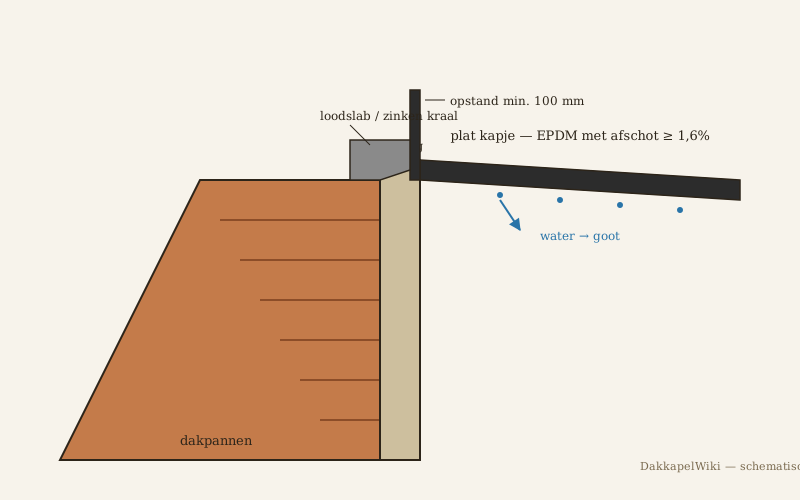
Roofing for the dormer roof
The roof of a dormer is usually almost flat with a slight slope. There are three main choices for waterproofing.
EPDM
EPDM is a synthetic rubber layer that is laid in one piece over the roof. Advantages: seamless, lightweight, UV-resistant, and easy to repair if damaged. Lifespan is often 30 years or more. EPDM is therefore the most chosen variant for modern dormers.
Bitumen
Bitumen is applied in one or two layers with a burner. A proven technology, with excellent performance against structural creep movements of the substrate. Slightly heavier and more labor-intensive than EPDM, but still often present on older dormers.
Zinc
Zinc is more expensive but exceptionally durable. A zinc roof lasts 50 years or more and provides a high-quality appearance. It requires craftsmanship when folding and connecting.
Slope: water must be able to drain
A "flat" roof is never completely flat. There must always be a slight slope towards the rainwater drain, often between 1 and 3 percent. Without a slope, rainwater will locally pool, freeze in the winter, and eventually penetrate the roofing material.
With prefab dormers, the slope is already applied in the factory. With traditional construction, the carpenter ensures that the frame already has this incline before the roofing is applied.
Roof edge trim and fascia board
At the top edge of the front facade, a roof edge trim is often installed: a piece of aluminum or plastic that seals the edge of the roof and prevents rainwater from dripping down along the facade.
The fascia board is located underneath and is usually made of wood, aluminum, or sheet material. Together, the roof edge trim and fascia board form the visual "face" of the dormer as well as an important water barrier.
Rainwater drainage
The rainwater that falls on the roof is guided via an outlet, small gutter, or direct drain to the existing roof gutter or a separate drainpipe.
- For small dormers, one drainage point on the lower side is often sufficient.
- For larger dormers, two drainage points are used.
- An emergency overflow can be included to prevent the roof from holding water in the event of a blockage.
A poorly connected drain is a silent killer: mold formation in the side wall sometimes only appears after years.
Lead flashing
Lead flashing is used for the connection between the dormer roof and the existing roof tiles. A strip of lead flashing is slid under the tiles and secured on the other side to the side wall or roof edge.
Type of lead
For dormers, lead code 18 or code 25 is often used, depending on the application. The weight and thickness ensure that the lead conforms to the surface without tearing.
Execution
Lead must be correctly dressed, hammered, or folded. Lead flashing that does not connect properly to the tiles will sooner or later be lifted by the wind, allowing rainwater to enter.
Lead alternatives
Lead alternatives based on rubber with metal mesh are a more environmentally friendly substitute. They are being applied increasingly often and perform comparably well when properly executed.
Connection to roof tiles
Around the dormer, the existing roof tiles are adjusted and laid back. Important points:
- Corner tiles or special insert tiles connect neatly to the lead flashing and the side wall.
- Mutual overlapping of tiles must continue right down to the lead connection.
- Counter battens and tile battens are adjusted to the new shape.
- Underneath the tiles, the vapor-permeable foil continues uninterrupted.
- With frost penetration, tiles can break; broken tiles are replaced immediately.
Side walls — the most leak-sensitive point
The side walls form the transition between the dormer roof and the existing pitched roof surface. This is where a vertical wall meets a pitched tiled roof — a tricky geometry that requires careful execution.
- Lead flashing under the tiles, folded double on the side wall.
- Connection to the roofing of the flat roof (EPDM against lead).
- Adequate overlapping for water hitting the side wall.
- Firm fastening so the wind cannot lift the lead flashing.
By far the most dormer leaks start at this point. Careful execution here is the best investment in a leak-free future.
Roof edge and penetrations
The upper edge of the roof is sealed with a roof edge profile or an upstand. On the other side of the roof is the drain or overflow.
Any penetrations through the roof — for example, for a ventilation duct or an outdoor socket — require extra detailing with collars and sealant. The fewer penetrations, the smaller the risk.
Maintenance
A well-made dormer requires little maintenance, but not entirely no maintenance.
- Remove leaves and moss from the roof, especially near overhanging trees.
- Keep rainwater drainage clear of blockages.
- Visually inspect lead connections every few years.
- Check EPDM for tears or places where the glue is letting go.
- Check bitumen for blistering or tearing.
- Check zinc cladding for white deposits or damage.
A brief annual inspection often prevents major damage years later.
Common mistakes
- Insufficient slope, causing rainwater to locally pool.
- Incorrectly dressed lead, with flaps that can be lifted by the wind.
- Too short lead flashing that does not reach sufficiently under the roof tiles.
- EPDM with air bubbles or poor glue joints.
- Clogged drainage, leading to flooding on the roof.
- No roof edge trim, causing rainwater to drip down along the facade.
- Penetrations without a collar, resulting in creeping leaks.
Comparison table
| Material | Lifespan | Maintenance | Visual appearance |
|---|---|---|---|
| EPDM | 30+ years | Low | Matte black, fairly neutral |
| Bitumen | 20–30 years | Average | Similar to roofing felt |
| Zinc | 50+ years | Very low | High-quality metallic finish |
Frequently asked questions
Brief answers to frequently asked questions on this topic.
- What is the best roofing material for a dormer?
- For most dormers, EPDM is a good choice: seamless, long-lasting, and relatively easy to maintain.
- Must there always be a slope on the roof?
- Yes. Without a slope, water pools and leaks will eventually occur.
- How long does lead flashing last?
- Correctly applied lead flashing lasts 50 years or longer. Poorly applied lead flashing can cause problems within five years.
- What is a lead alternative?
- A product based on rubber and metal mesh that is used as an alternative to traditional lead flashing.
- How often should I inspect my dormer?
- A brief visual inspection once a year is sufficient, paying attention to lead flashing, rainwater drainage, and any potential tears.
- What should I do if I suspect a leak?
- Have a professional look at it quickly. Persistent leaking affects the insulation and structure, and is usually easy to repair at an early stage.
- Can I stand on the roof of my dormer myself?
- With EPDM and bitumen this is possible for a short time, but standing still for long can cause damage. Walking on zinc is not recommended without walking mats.
- What is an emergency overflow?
- A secondary drain or opening that drains water if the primary drain becomes clogged, to prevent flooding and overloading of the roof.
- Can EPDM be replaced later?
- Yes. EPDM can be replaced entirely or in parts, provided the substrate is intact.
- Is bitumen outdated?
- Not necessarily. Bitumen is still applied, but EPDM has practical advantages that currently make it more popular.
Summary
Waterproofing determines whether a dormer will last ten or fifty years without worries. EPDM, bitumen, and zinc are the main choices for the roof, with lead or a lead alternative for the connection to roof tiles. Slope, roof edge trim, rainwater drainage, and a careful side wall connection together create the building physics system that neatly drains rainwater.
Conclusion
A leak-free dormer is no coincidence. It is the result of consistent choices for good materials, professional execution, and simple geometry wherever possible. Anyone having a dormer installed would do well to explicitly ask when requesting a quote which lead codes, which roofing material, and what type of drainage are being used. These details determine whether the work will remain untouched for thirty years.
Rules for planning permission, aesthetic guidelines, and typical construction vary by municipality. View the information for your city or see the full region overview.
- Noord-HollandDormer Amsterdam
- Zuid-HollandDormer Rotterdam
- Zuid-HollandDormer Den Haag
- UtrechtDormer Utrecht
- Noord-BrabantDormer Eindhoven
- GroningenDormer Groningen
- Noord-BrabantDormer Tilburg
- FlevolandDormer Almere
- Noord-BrabantDormer Breda
- GelderlandDormer Nijmegen
- GelderlandDormer Arnhem
- Noord-HollandDormer Haarlem